
JOY Talks
Judo as a Compass in a Changing World; dr. Simone Ciaccioni, University of Rome Foro Italico
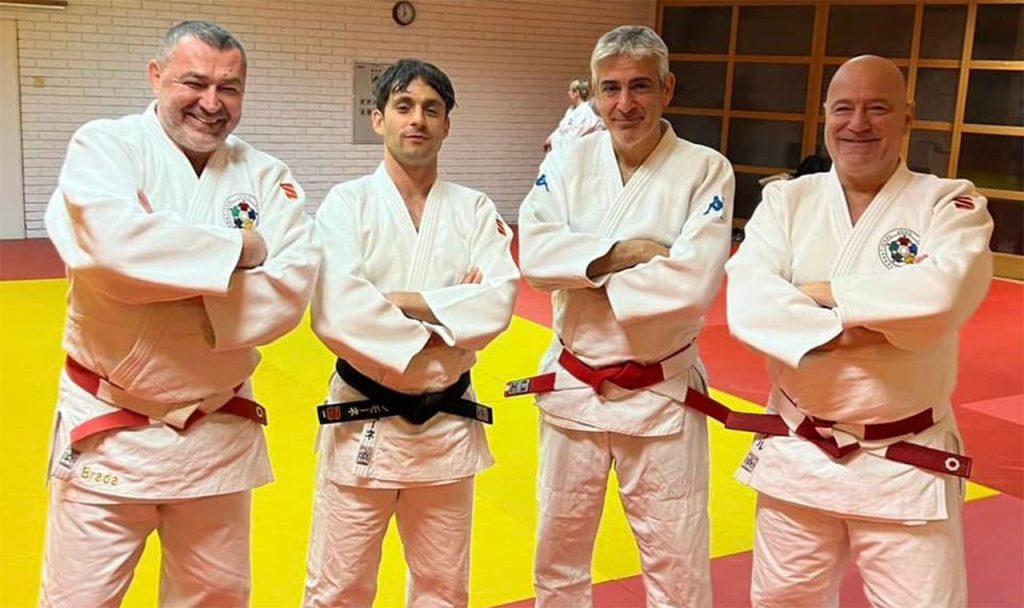
Dr. Simone Ciaccioni, 4th DAN and researcher at the the University of Rome Foro Italico, works at the intersection of sport science, education, and philosophy. Through European research and academic practice, he explores how movement shapes not only performance, but also relationships, health, and our understanding of ourselves and others.
In a time marked by growing distance between people, his perspective returns to a simple but demanding question: what does it mean to remain human through practice?
Judo is often described as more than a sport. How do you see judo as a bridge between generations, bringing together children, adults, and older people on the tatami?
“Judo – More than Sport” is not merely a successful slogan of the European Judo Union; it is also a fortunate reality and a delicate necessity. Most judoka worldwide experience this every day.
I’d say intergenerational judo is another intriguing reality: it is often part of our daily experience, yet we do not always pay sufficient attention to it. Look into the eyes of participants in many judo classes where children and adults practise together. You will perceive the tension and excitement of beginning an activity that promises to be disruptive – and it will be: it disrupts outdated patterns and age stereotypes and, as you rightly noted, it builds bridges between generations.
What, until a few decades ago, was everyday life has become the exception. In a digital world, the simple act of physical contact between human beings is paradoxically becoming less common and increasingly complex. When 15, 30, 50, or more years of age difference are involved, everything becomes even more complex.
Judo can break through these barriers and create new spaces for contact and communication. In judo, people are in contact: they touch one another, look at one another, and sense one another at an intimate distance. They reclaim their own humanity and, ultimately, come to understand the humanity of others. The most moving aspect is that nothing new needs to be invented. We simply need to practise… judo.
You’ve spoken about the two principles of judo: Jita-Kyoei and Seiryoku-Zenyo as a kind of compass, a stable and reassuring beacon in a stormy sea. What did you mean by that, and how do these principles influence the way you approach both sport and life?
Unlike many other disciplines, judo is grounded in two very strong principles that must be studied and applied. They are often translated as “maximum efficient use of energy” and “mutual welfare and benefit.” They are, in fact, a compass – and is it not true that life, regardless of one’s condition, individual circumstances, age, sex, geographical position, and so forth, often appears as a stormy sea?
In the past, there were great ideologies that inspired humankind. Some are chilling, while others still appeal to the instincts or the intellectual sensibilities of certain thinkers. In practical terms, however, we live in a postmodern and post-ideological world. Yet, in my view, these two principles explain how to live while remaining resilient and evergreen across the centuries.
Life is a continuous search for dynamic balance. Judo enables us to experience physically that, to remain standing, we must learn to use our energy as effectively as possible, step by step, movement after movement, breath after breath. If we do not, we are very likely to end up on the ground, thrown by some external force. The fall is not the end; it can even become an ally. If we reflect and train, we learn that we can improve and use our energy well.
Judo then explains a second aspect, which is inseparable from the first: only together can we grow and progress. We may become very strong, very fast, and as hard as small diamonds, but life, sometimes sooner and sometimes later, reveals all our fragilities, fears, limitations, and inadequacies. Then there is only one way to gain strength, find courage, and build ourselves as men and women: through the help of others. Our discipline makes this clear without words, without explanations, and without intermediaries. In a stormy sea, we have a compass.
You are also involved in the HOPE – Hospital schools’ guidelines On Physical Education, a European project supported by the Marie Skłodowska-Curie Actions programme at the University of Rome Foro Italico. What inspired you to start working on bringing movement and physical education into hospital environments?
Between 2019 and 2020, during the onset and first major wave of the COVID-19 pandemic, I worked as a physical education teacher in the two main hospitals of Rome. In Italy, physical education is also provided in hospitals for young patients. Due to the specific nature of that context, I immediately realized the need to develop guidelines for teachers who interact with and teach young patients every day. I saw the considerable potential that physical education has in this setting, and from this insight, a project proposal was developed.
The European Commission positively evaluated the proposal and approved its funding. At present, we are developing the HOPE project in Bern, Switzerland, where I am currently based. The project consortium also includes prestigious universities in Portugal and Brazil, as well as my alma mater, the University of Rome “Foro Italico”, and sports associations in Croatia, with the support of the International Judo Federation.
In fact, many sports can be adapted for use in hospital schools, but certain Eastern disciplines seem particularly effective due to the nature of their exercises. They alsotend to integrate body and mind as a unified system. Yoga and martial arts, for example, are increasingly supported by scientific research. I believe judo has strong potential that deserves further exploration.
We have only just begun this path. Therefore, I would be pleased if those interested in this initiative contacted us to explore opportunities for collaboration. We are looking for experts such as physicians, nurses, teachers, sport coaches, psychologists, and family members who can share their experience in this field. The HOPE project can be followed through its social media channels, including its Instagram account, as well as the University website.
Working in such a sensitive context as hospitals must bring unique human experiences. What has stayed with you most from the HOPE project so far?
After just over five months in the HOPE project, what stands out most to me is the complexity of the topic. While all countries aim to protect the fundamental rights to health and education, they do so in very different ways. Focusing on Europe, I have observed that each country’s historical development, culture, economic resources, healthcare and social systems, and many other factors shape unique approaches. These differences make the work both challenging and fascinating.
I consider myself very fortunate and, in a certain sense, privileged. The people I have met along this journey are truly remarkable. They share a deep inner motivation and a strong commitment to creating meaningful impact in the social, academic, and healthcare sectors.
At the same time, this is a particularly sensitive field. We are fully aware that the young patients at the centre of our work are among the most vulnerable members of society. Working with them requires empathy, compassion, and dedication. However, this empathy is inevitably accompanied by the awareness that some patients may face life-threatening conditions.
Forming a bond with a young patient is often unavoidable, yet confronting the possibility of losing them is one of the most challenging aspects of this work. It requires emotional resilience and psychological preparation, which may not always be sufficient to ease the pain of loss.
As one of the main creators and driving forces behind both the JOY project and its predecessor EDJCO – Educating Judo Coaches for Older Practitioners, when you think back to the beginning, what moment or experience first made you believe these projects were needed?
Behind HOPE, JOY, EdJCO, and even my initial doctoral project, there is a common thread: a collective effort to understand reality and respond to it through meaningful action. This has always been a team endeavour. No project of this kind can succeedwithout a shared commitment and the contribution of many people working towards a common goal.
We began with the awareness that Europe, and much of the world, is facing a rapidly ageing population. This raised an important question: what can we do to support healthy and active ageing? Research has shown that judo can be particularly effective in promoting health, well-being, and quality of life among people over the age of 65. For this reason, it became essential to strengthen the knowledge, skills, and competences of judo coaches, who play a key role as catalysts for positive change. This was the main objective of EdJCO.
Then came the pandemic, which accelerated processes of social isolation that were already affecting both younger and older generations. At the same time, the European Union increasingly emphasized the importance of strengthening connections between generations. JOY emerged within this context, making intergenerational dialogue and cooperation a natural focus of our work.
Today, through HOPE, I aspire to contribute to the well-being of young patients. I firmly believe that a society can be considered truly healthy and equitable only when it is able to care for its most vulnerable members.
When you reflect on your work, what do research projects represent to you personally beyond their formal goals and outcomes?
For a researcher, research means a great deal, perhaps everything. It is about discovering, learning, and building connections. It is about embracing moments of serendipity, making mistakes and learning from them, striving to grow while remaining aware of one’s limitations, and persevering despite inevitable setbacks. Above all, it is about continually seeking a deeper understanding of reality and nurturing, day after day, a sense of wonder which gives meaning to both research and life itself.
If a young judoka in the future never hears about JOY, EDJCO, or HOPE directly, what would you still hope they experience because of them?
I imagine a young judoka who, even in the years to come, discovers a discipline that helps them reach their full potential. A practice that supports those who feel weak, restores balance to those who are uncertain, and brings together children and adults, beginners and advanced practitioners alike.
I imagine a young judoka who grows in a respectful and safe environment, guided by a sensei who shows the way forward, and surrounded by companions who share essential values: courage, respect, humility, friendship, honour, sincerity, self-control, and kindness.
JOY, EdJCO, and HOPE may one day fade from memory, but if the values that inspired them remain alive, judo will continue to serve its true purpose.
Mesut Kapan: Judo as a Shared Culture of Life
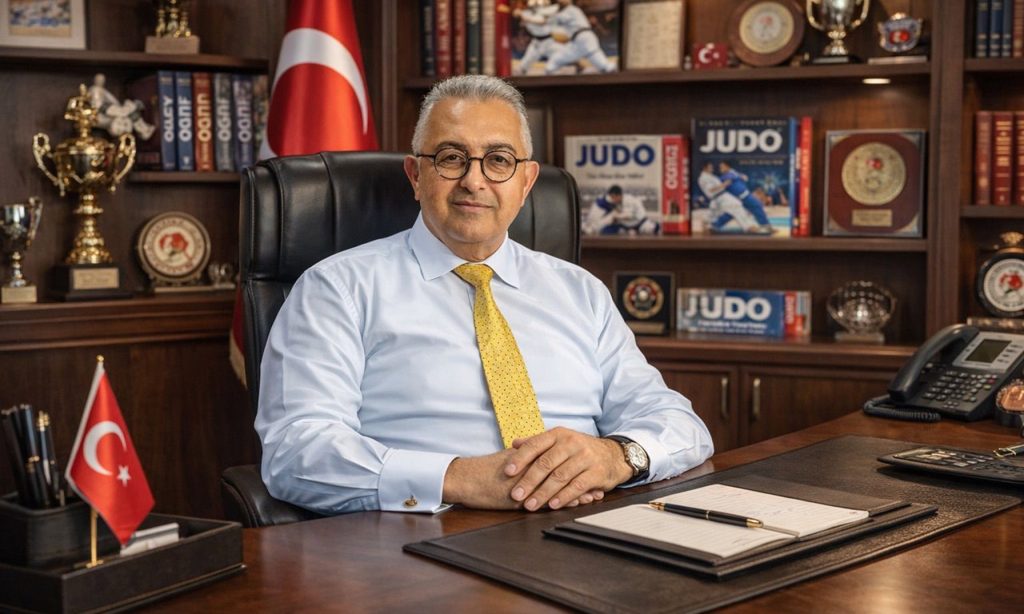
What happens when judo is not just part of your professional world, but something that also lives in your everyday life?
Mr Mesut Kapan, 7th DAN, Technical Director of the Turkish National Judo Team, IJF Academy Expert, and Executive Board Member of İzmir Alsancak Jimnastik İhtisas Spor Kulübü, offers a personal perspective on judo as a shared culture that is lived every day.
In this JOY Talk, he opens a window into how judo extends beyond the tatami and into everyday life, shared at home with his wife, son, and daughter.
In the JOY project, we often talk about judo as a lifelong journey. From your perspective, what makes judo such a special space for connecting different generations?
One of the most important features that makes judo unique is that age and generational differences disappear on the tatami. A child, a parent, and a master who has dedicated years to this sport can all come together around the same values: respect, discipline, solidarity, and continuous development.
Judo is not just a physical sport; it is a form of life education that shapes a person’s character. Therefore, people can practise it not only during a certain period of their lives, but at different stages throughout their lifetime.
It offers a unique environment where generations can learn from one another and grow together.
Coaches play an important role not only in developing athletes, but also in shaping values, relationships, and community. In your opinion, what is the most important role of a judo coach in intergenerational practice today?
Today, the role of a judo coach goes far beyond technical training. Coaches are also educators, guides, and leaders of their group.
In intergenerational practice, the coach’s role is to bring different age groups together into a shared culture, build trust, and make sure everyone feels seen and valued.
A big part of modern coaching is also finding ways to bring judo into everyday life and helping athletes build real, meaningful connections with each other.
In 2024, Türkiye hosted a large coaching congress where the JOY project was introduced to many coaches. What kind of reactions or reflections did you hear when discussing intergenerational judo with them?
At the coaching congress held in Türkiye, the feedback on the JOY project was very positive. Many coaches appreciated the idea of judo being developed not only as a performance-oriented sport, but also as a way to strengthen social connections.
The concept of involving families, experienced athletes, and elite judoka within the same system was especially well received. It encouraged coaches to reflect more broadly on judo’s long-term impact on society and the role it can play beyond competition.
One of the key outcomes of JOY is the development of online learning tools and resources for coaches. How do you see digital learning supporting coaches in working with different generations and age groups?
Digital learning tools play an important role in coach education, especially in the context of modern competitions and training. They make it easier for coaches to access knowledge and experiences from different parts of the world, all in one place.
This is especially valuable when it comes to finding practical pedagogical solutions, improving safety practices, and adapting communication to different age groups. In this way, digital learning supports a culture of continuous learning and helps coaches stay connected, informed, and up to date.
Many coaches work with very diverse groups; children, parents, older practitioners, and recreational judoka. What challenges do coaches face in creating an inclusive and supportive environment for everyone on the tatami?
This is both a great opportunity and a significant responsibility for coaches working with groups of different ages and expectations. Children have different motivations and needs, while older practitioners may face specific physical limitations. At the same time, recreational judoka often come with their own personal goals and expectations.
The real challenge for coaches is to create an environment where everyone feels confident, free, and included in the process.
In your personal story, judo connects your family across generations. Could you share a bit more about that and what it means to experience judo as part of family life?
For me, judo is not just a sport, but a strong bond that links our family. Over the years, it has helped us share the same values as a family. On the tatami, time, discipline, mutual respect, solidarity, and fighting together all come together in a very natural way.
Experiencing judo as part of family life has created strong communication between generations. For us, judo is not just about competition, but also a shared way of life.
Looking ahead, what kind of coaching culture would you like to see grow in the European and Turkish judo communities?
In the future, I would like to see a more inclusive, education-focused, and human development-centered coaching culture in Europe and Türkiye. Of course, success and performance remain important, but the development of athletes’ character should also be a key part of the process, while preserving the fundamental values of judo.
Coaches are increasingly growing not only as results-oriented professionals, but also as leaders who carry social responsibility. More collaboration, knowledge sharing, and the development of international training networks are already emerging.
Finally, if you could share a message with young coaches who want to use judo beyond performance, to build stronger communities and connect generations, what would it be?
I believe the most important message for young coaches is this: judo is not a sport practised to win medals. It is a powerful educational tool that brings people together, builds trust, and creates lifelong friendships.
I trust that if, as a coach, you pass on not only technical skills but also respect, patience, and solidarity, you can create an even greater impact. Strong communities and healthy generations can only grow from this understanding.
dr. Nuša Lampe, Judo Club Golovec, Slovenia
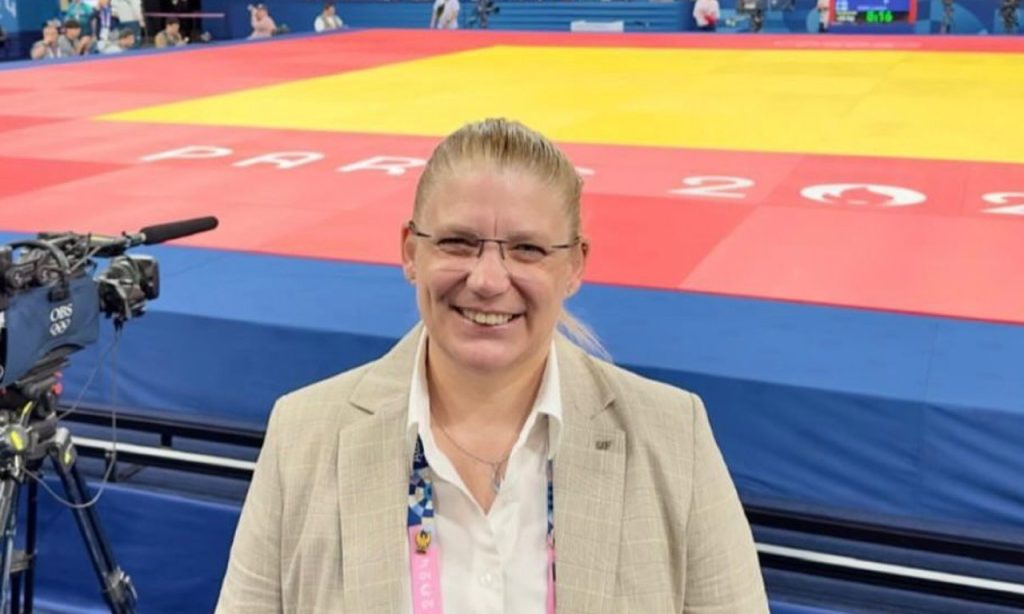
Dr. Nuša Lampe, 6th DAN, Slovenia’s first female international judo referee, and former first female Vice-President of the National Judo Federation, as well as Director of Judo Club Golovec, shares her insights on what truly shapes performance and learning in judo. Drawing from her doctoral research on international referees, she explains how personality, environment, and support systems influence not only refereeing, but also coaching and education.
In this JOY Talk, Dr. Lampe discusses intergenerational learning, inclusive coaching practices, and the educational value of kata, illustrating how judo can be a lifelong journey of growth and collaboration across generations. With the national kata championship taking place this weekend in Ljubljana, co-organised by Judo Club Golovec, her reflections are particularly timely and offer practical guidance for coaches, referees, and judoka at all levels.
Refereeing, Personality, and the Learning Environment
In 2025, you completed your doctoral research on the work performance and personality traits of international judo referees on the World Judo Tour. What inspired you to choose this topic, and what is one insight that could change how we understand refereeing and judo education?
The topic emerged from my many years of experience as an international Judo referee and from my work in the field of Judo education. In practice, I often noticed that referees are usually discussed mainly in terms of rules, technical knowledge, or decision-making on the Tatami. Much less attention is given to their personality traits and the work environment in which they operate. For this reason, I wanted to explore how personality traits influence the work performance of top-level referees.
One interesting finding from the research was that personality traits such as conscientiousness, agreeableness, and extraversion significantly influence how referees perceive their work environment. In this context, so-called workplace resources play an important role. These resources include access to information, support from supervisors and colleagues, available organisational resources, and opportunities for learning and professional development.
The research showed that referees who perceive greater support, more opportunities for development, and better access to information tend to perform their duties with greater confidence and effectiveness. This means that a referee’s performance is not determined only by knowledge of the rules but also by psychological and social factors and by the quality of the supportive environment. This finding suggests that referee and coach education should pay greater attention to the development of personal competencies, communication skills, and supportive learning environments.
Judo as a Space for Intergenerational Learning
Intergenerational learning is a core value of the JOY project. Why do you think learning across generations, from children to seniors, is so valuable in judo? Have you seen this in practice through your coaching or refereeing experience?
Judo is, at its core, an educational system, not only a sport. One of its greatest strengths is the opportunity for different generations to train and learn together; children, young people, adults, and seniors. Such an environment creates unique opportunities for mutual learning.
Children learn respect, discipline, and patience when training with more experienced partners. Older practitioners, on the other hand, often rediscover the joy of movement, energy, and spontaneity that younger generations bring. In practice, I have often seen
strong bonds forming between generations; for example, when experienced judoka help beginners, or when children train alongside their parents or even grandparents.
Rethinking Coaching in Modern Judo
From your perspective, what are the biggest gaps or needs in judo coaching today, especially when working with children, beginners, or mixed-age groups? What would you like to see change in the coming years?
One of the biggest gaps in modern Judo coaching is often an excessive focus on competitive results, especially in younger age categories. Competition is certainly an important part of Judo, but it should not be the only objective.
When working with children, beginners, or mixed-age groups, it is essential to create an environment where learning, motor development, social skills, and enjoyment of movement are at the forefront. Coaches should have stronger pedagogical knowledge about working with different age groups and about adapting training methods to different abilities.
In the coming years, I would like to see more emphasis on coach education, particularly in areas such as inclusion, intergenerational practice, and long-term personal development. Judo has enormous potential as a lifelong activity, not only as a competitive sport.
From Inclusion to Practice: The JOY Project
The JOY project is developing an online tool to support more inclusive and intergenerational coaching. What excites you most about this initiative, and how do you think it will help coaches and clubs in practice?
What excites me most is the idea that coaches will have access to practical tools, methods, and ideas that can help them develop more inclusive programmes. Many coaches have good intentions, but they often lack support or concrete examples of how to organise training sessions for different age groups or for people with different abilities.
This online tool could become an important source of knowledge where coaches can find training ideas, teaching methods, and examples of good practices from different countries. I hope it will help clubs create a more open, inclusive, and intergenerational environment where everyone feels welcome.
Kata and Lifelong Learning in Judo
Judo education is not only about randori – kata also plays an important role. At Judo Club Golovec, you work with kata across all age groups. How young are your youngest participants, and how has this evolved in your work? What stands out from your experience of teaching kata to different generations?
In Judo, we often emphasise that learning is based on four fundamental pillars: Randori, Kata, Kogi, and Mondo.
• Randori represents practical learning through free practice and experience.
• Kata allows for a deeper understanding of the technical principles of Judo.
• Kogi refers to lectures or explanations of concepts, rules, and the philosophy of Judo.
• Mondo is a discussion-based learning process, where students and the teacher reflect together on knowledge and experience.
At Judo Club Golovec, we try to incorporate all these elements into the learning process from an early age. Our youngest participants begin to encounter basic elements of Kata at around six or seven years old. Of course, the approach is always adapted to the age of the children; for the youngest, the focus is mainly on understanding basic movement principles, balance, cooperation, and respect for a partner.
Kata has great educational value because it develops precision, body awareness, and an understanding of the principles of Judo. It is particularly interesting to observe how Kata can connect different generations. We often see older Judoka patiently helping younger ones understand the rhythm and movement of techniques. This kind of cooperation creates a very positive learning environment.
Beginnings – From Physics to Judo
Finally, what advice would you give to young coaches who want to create meaningful, inclusive, and lifelong learning experiences through judo?
My advice to young coaches would be to always see Judo as something broader than just sport techniques or competition. Judo is a rich educational system that can accompany a person throughout their entire life. It is important to create an environment where everyone feels accepted and respected, regardless of age, ability, or goals. Coaches carry a great responsibility, as they often influence the development of young people not only as athletes but also as individuals.
The most important advice would be: stay curious, continue learning, and listen to your students. Every training session is an opportunity for learning – both for the students and for the coach. The true goal of Judo is not only achieving results, but shaping people who will carry the values of Judo with them throughout their lives.
Prof. dr. Attilio Sacripanti, IJF Academy Foundation
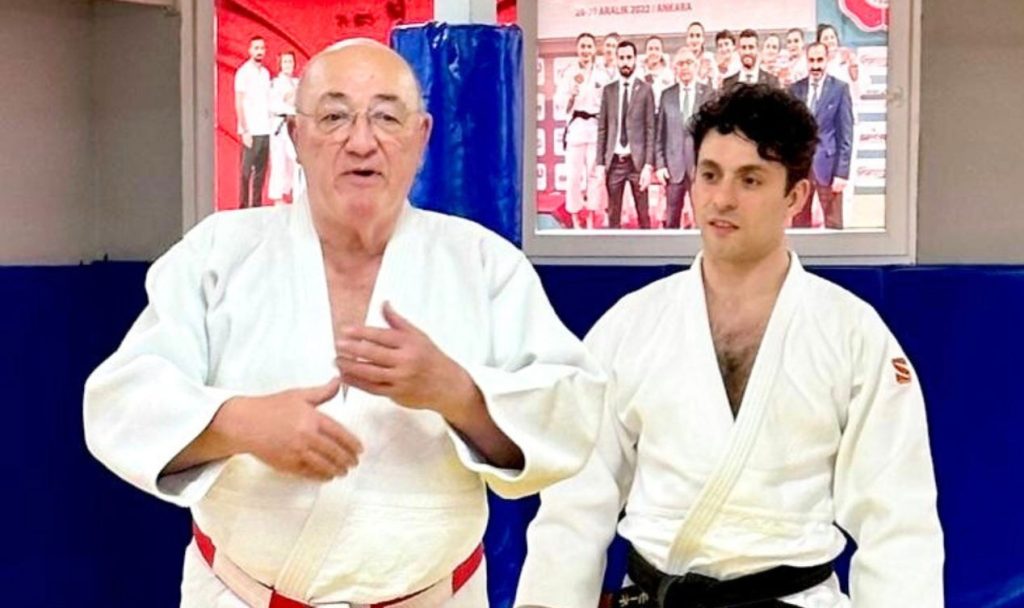
Rarely do knowledge, experience, and generosity converge in one person. We are deeply honoured to welcome Prof. Dr. Attilio Sacripanti, 7th DAN judo master, nuclear physicist, educator, and one of the world’s most respected voices connecting biomechanics and judo. With over 160 scientific publications, 23 books, and 8 patents, he has devoted his life to understanding movement, and through it, human potential. In this conversation, he shares not only groundbreaking ideas but also a lifetime of insight on how judo connects generations, deepens understanding, and enriches lives.
Beginnings – From Physics to Judo
You started judo at university while studying physics and later specialized in biomechanics. Looking back today, how has that decision shaped your life and scientific career?
I apologize to everyone in advance, but since I am old and have lived a long time, perhaps my answers will be a bit longer than necessary. In fact, the two paths advanced hand in hand and intersected with my work as a nuclear physicist. I worked for the National Committee for Nuclear Energy (CNEN), having won a competitive exam for a single position. Based near the power plants, I calculated the dose to the critical group, based on the intake of local foods. We first studied the transfer of radionuclides into the natural environment, then into food matrices, and finally into humans to calculate the dose. After the power plants closed, my research centre dedicated itself to a wide variety of subjects, and I initiated research with the Italian Judo Federation, the Italian Olympic Committee, and my office, which became ENEA, investigating the calculation of the energy consumption of a judoka in real competition (therefore without wearable equipment). We used a thermal imaging camera, and during that time, I worked with one of the leading experts in sports science, Professor Antonio Dal Monte. The research lasted four years, and we developed an equation that is also included in my book for the Academy. Shortly thereafter, Diadora specifically asked me to develop sports shoes for marathon runners, and once the contract was over, I obtained three of my eight industrial patents. And so, physics and biomechanics met as part of my work at the industrial research organisation to which I belonged.
What was it about judo that immediately captivated you?
To tell the truth, at first, nothing! Judo was a tool for me; I practiced it to relieve the stress of studying. That’s how I became a black belt – the first black belt at the University of Naples at the CUS University Sports Centre. There, I won the university championship in 1973, but in the final, I broke my shoulder. This ended my competitive career and marked the beginning of my refereeing career, making me the youngest international referee of the Federation.
Meanwhile, something important happened: a friend of mine, instructor Giuseppe Marmo, a former Italian champion, called to give me an English book that I still keep dearly, The Secret of Judo by Avakian and Watanabe. I didn’t like the book at all, so I decided to write one myself on the biomechanics of judo, starting from the Neapolitan Alfonso Borelli, the founder of biomechanics (1680), and using real scientific works. I discovered there were none in the West, but then I found a very valuable continuous collection in the Bulletin of the Association for the Scientific Study on Judo of the Kodokan, which my dear friend, Master Tommaso Betti Berutto, lent me, as he had the entire library.
This allowed me to write my first book on judo biomechanics. Through the Japanese works, I identified that the displacement motion of the pair on the tatami is of a Brownian type, and I also organised the biomechanical classification of judo techniques, which I presented in Athens in 1987 and shortly afterward found reflected in the American text Biomechanics of Human Movement by Adrian & Cooper, 1989… but that is another story.
Thus, judo became an important part of my life because it was not just “simple gymnastics“ but a cultural phenomenon to understand. For a physicist, that is true appeal. That’s how I began to love judo, a mature and lasting love, with its Eastern cultural charm, but always viewed through a Western cultural lens, because European culture certainly has the same dignity as Eastern culture, and far more points of commonality than one might think.
Science Meets the Tatami – Biomechanics of Judo
How has your scientific research influenced your understanding and practice of judo? Can you recall the first time your research changed the way you approached a technique on the mat?
In every respect, after the biomechanical classification of techniques in 1987, I have always seen judo in a profoundly different way. I remember, for example, a delightful event: in 1989, Minatoya Hiroshi came to Rome as a tourist, and I went to meet him at the hotel to discuss some of my analyses. He was, of course, a well-known world champion, while I was an illustrious unknown. He was very courteous and received me in the hotel lobby, and we began to talk about judo and biomechanics.
When I explained that, from a biomechanical perspective, Tori applies the exact same principle for Uchi-mata and O-soto-gari, and that therefore they are, roughly speaking, the same technique, the only difference being uke’s body (face and shoulders), he was shocked and insisted I was wrong. After half an hour of discussion, we shared a cognac and performed several joint demonstrations of Uchi-mata and O-soto-gari in the hall, in civilian clothes. His face lit up as he finally understood the concept. He was so happy that he ran to his room and immediately returned, giving my wife, who had accompanied me, a kite signed by Utamaru, which I still treasure.
Earlier, in 1988, I was a guest at a friend’s in Naples (I never opened a personal dojo), and we were always discussing Uchi-mata. He asked me what I thought were the best grips and where to place the leg that sweeps the inside of the thigh. After some discussion, I ventured to give advice based on biomechanics and explained that to save energy, Tori’s leg could even sweep the inside of the malleolus by having very high grips. Here a passionate discussion arose on the fact that the Japanese meaning was “inner thigh.” I saw the effectiveness, and he saw the tradition. So, I told him that the grips were superfluous for all the couple’s techniques. For De-ashi-barai it is easy to understand, but for Uchi-mata it is less obvious (people always forget that we are in a gravitational field), and he told me I was joking. To convince him, I first performed the technique on a young man, and then directly on him while standing. He did not believe it at first, but that demonstration convinced him.
Gensoku no Genkei – Judo for Older Adults
In 2024, your work explored how judo can help older adults prevent falls and maintain mobility, leading to the development of Gensoku no Genkei. Could you explain how this method works?
It is very simple: the Gensoku is a sequence of ten movements inspired by Itsutsu-no-Kata, divided into two series of five. In the first series, Tori applies simple technical actions (forces) on Uke, who must learn how to fall by receiving support to help him in the process (in the spirit of Jita Kyoei). In the second series, Uke applies the same actions on Tori, who learns to defend himself with minimal effort (in the spirit of Seiryoku-Zenyo). From this perspective, it also becomes a practical way of carrying out Kano Sensei’s two maxims: Gensoku No Genkei Official Lesson (Safe Form)
How did the idea for Gensoku No Genkei come about?
Certainly, the problem of teaching falls to an elderly person, or to a boy, must necessarily be based on the biomechanically simplest movements a person can perform. But I also wanted to include movement, since in the Dojo we traditionally teach falling from a fixed position, while elderly people often fall while moving. How to solve this problem? Kano Sensei had already shown us at the beginning of judo, by inventing or using Kata (a sequence of prearranged movements to train people). But could I, an illustrious unknown, allow myself to invent a Kata? I remained perplexed by this question, but fortunately Kano Sensei came to help me through a friend of mine, 9th DAN veteran of the first Tokyo Olympics, Sensei Bruno Carmeni, who knows Japanese, which I completely ignore.
From the text I prepared (PDF) Gensoku No Genkei (原則 の 原型) A journey into the simplicity of movement 28 JUNE 2022 PROF. ATTILIO SACRIPANTI VII Dan -IJF Academy EDucating Judo Coaches for Older Practitioners
“If we speak about Karate Kata and Judo Kata, there are very big differences in these two words as ideogram with the same sound. Referring to Karate, the ideographic part is composed of two main parts, one upper and one lower. Kata of karate, Kata of judo The first part is a common basis of the two interpretations indicating “good”, but if we add two other signs it indicates a “rule”, a “condemnation”, by extension “prisoner of the model”, that is a “form closed “which suggests something codified that does not allow a change. The second part refers to the earth, the ground, the gravitational shape, the void, which serves to create the shape of objects. Kata Good closed form Earth By choosing the second ideogram 形, Kanō Jigorō 嘉納 治 五郎 became the first in the history of the “arts of skill”, known in the West with the misleading concept of “martial art”, to have adopted this kanji indicating the kata 形. The first ideogram is included in the closed expressions of exasperated repetitiveness. What may seem to a layman, a form of enslaving and almost robotic learning, is for the Japanese expert a method of instruction that allows him to have access to his own intrinsic potential. The second instead used in Judo, open form, brings the Judoka to self-expressive and creative opportunities.”
This was the solution: apply a creative opportunity to the Itsutsu no Kata! Why Itsutsu? Because it was short and simple (as movement, not as meaning), making it very suitable as a basis for a new evolution.
Following the Kano-Carmeni episode, another series of Jita Kyoei “miracles” occurred: first, Franco Capelletti, 10th DAN master, asked me to help him with his idea of Itsutsu-no-Kata; then a group of friends and judo masters became passionate about the undertaking (Aliano, Fabi, Ruggeri, Quaglia); and finally, Edward Shiley, 8th DAN from the United States (whom I had met via email), voluntarily asked me to review the English of the text. Thus, I finalized what I wrote in the summary:
“This is the story of a journey in search of the archetype of the simplicity both of movement and use of forces that ended with ten idealized actions, that answer the two questions. Can you please help me fall down? What is the best use of force? Seen in the light of the two maxims of Judo: Jita Kyoei (自他共榮) and Seiryoku Zenyo (精力善用)- Gensoku No Genkei (原則 の 原型) “The Archetype of the Principle” of the use of forces”.
Artificial Intelligence & the Future of Judo
How can AI and non-linear dynamics be applied to judo movements such as Seoi-otoshi (Suwari) and Uchi-mata as archetypes of throws, and what insights can this approach provide for coaching and training across different age groups?
Oh! That’s a sneaky question! And, yes, I mentioned it to you, but the work is, in fact, still a work in progress, and you don’t ask a painter what he’s painting while he’s still working. But given your kindness, I’ll try to answer you anyway. Judo is a complex system in which everything evolves continuously over time. The study I’ve addressed and explained in The Biomechanical Science of Judo, an IJF Academy Publication, is a simplified model of what actually happens, in which I begin to study and explain
the techniques step by step until I reach competition analysis. This valid model, although it seems complex, has inherent limitations associated with simplification. Obviously, it seems logical to seek to develop a study that analyzes reality in greater depth. This was impossible until now due to two limitations: on the one hand, theoretical tools were being developed, nonlinear dynamics, fractals, and chaos theory; on the other, tools for extracting useful information from videos. Now, with the advent of AI, all this is possible, and I am trying to open up the world of judo to an understanding of its true complexity.
Let me clarify right away that the initial target is the study of high-level competition, the results of which will then allow for updates in the practice of clubs and across different age groups. I will try to explain the concepts in the simplest way possible. Judo, in this new vision, is no longer a set of techniques to be applied, but a process that continuously seeks to provoke the opponent’s instability, controlling it until ippon. But no longer through simple forces, rather through sophisticated mathematical tools that “exist” in an ideal space called phase space, such as attractors, basins of attraction, bifurcations, trajectories produced by sensitivity to initial conditions, etc. Therefore, the macroscopic phases – imbalance, positioning, attack, projection – that we know and study, disappear and are now united in a geometric continuity, in which the Tori-Uke interaction is seen, in a more complex but realistic way, as a continuous, coupled, and self-organizing system that seeks to develop control over the opponent’s instability. So the concept of throwing technique is replaced by a basic model of instability, or “Archetype of instability.”
The second step was the identification of two basic archetypes in known terms, Uchi-mata and Seoi-otoshi in the suwari version, which, in terms of instability (according to my intuition, to be tested experimentally), include within them, by changing the degree of instability, all the other throwing techniques. This could be a new dynamic classification of throwing techniques, following Kano’s five principles (Te, Ashi, Koshi, Ma, and Yoko Sutemi waza) and the Sacripanti Biomechanical Classification based on two principles (Couple and Lever techniques); the classification would then function according to the Archetypes of Instability. In short, it will depend on a single principle only (Instability dynamics), which leads Uke’s body the basin of attraction of the throw, where Tori applies a torque or a lever to throw Uke. Really speaking, with this new vision, I try to modernize judo without betraying its essence.
How can these insights help coaches better understand movement patterns and support learners of all levels?
For coaches, this new way could be useful because it provides only one operational model: Instability. It offers a concrete, fight-related teaching program based on this model and allows coaches to interpret the fight with a single, objective tool. This new vision can create a bridge for athletes between their intuitions and scientific data and measurements, which can be interpreted only with the help of AI. The role of AI in the near future will be as an Analytical Catalyst.
Unlike many sports science papers that use AI for simple video recognition, this framework utilizes AI, specifically Deep Learning and HDBSCAN (Hierarchical Density-Based Spatial Clustering of Applications with Noise), applied over varying values, integrating the results to find a clustering that provides the best stability. For example:
- Identify “Hidden Topologies”: Detect patterns in Center of Mass trajectories that are invisible to the human eye.
- Quantify Instability: Use Lyapunov Exponents to pinpoint the exact moment of Kuzushi as a phase transition rather than a subjective observation.
- Automated Clustering: The system can discover “hybrid” archetypes of Instability, suggesting that AI can expand our understanding of technical execution beyond traditional teaching (see Chaotic Throws in my IJF Academy book).
In my paper, I will also propose a pedagogical evolution based on a three-level educational program (Awareness, Timing, and Robust Application), which provides a scientific roadmap for developing “Technical Intelligence” in elite athletes, shifting the focus from “learning a move” to “mastering a dynamical state.”
AI can also help in injury prevention: by monitoring transitions into high-instability regimes, the system could potentially flag execution patterns that lead to high-risk falls or joint stress before an injury occurs. With this last note, I think my answer is sufficient, before being accused… of judo heresy!
Is there a recent innovation or approach that has particularly excited you?
Yes, one particularly interesting idea comes from the latest scientific contributions in motor skill acquisition, and it is redefining judo training worldwide. This method is called Ecological Dynamics (ED), now considered one of the most advanced theoretical frameworks for oppositional sports. According to ED, the judoka is a complex, self-organizing system, and learning arises from the continuous interaction between athlete, opponent, and environment.
ED is transforming judo coaching by emphasizing adaptation, perception-action coupling, and functional variability. Key points: technical solutions emerge from the context, not from predefined patterns; training must replicate the complexity of combat; and athletes develop resilience and adaptability.
From ED, another important method has emerged: the Constraints-Led Approach (CLA). CLA is an applied methodology based on manipulating task, environmental, and organism constraints to guide learning. It is recognized as one of the most influential models in contemporary judo skill acquisition. Key points: the coach becomes a “constraint designer”; variability is a driver of learning, not a mistake; and technical solutions emerge spontaneously under well-designed constraints.
Traditionally, discussions in judo often focus on National Schools (Japan, Russia, Georgia). These are not scientific theories but cultural and methodological models. Today, however, they are increasingly being reinterpreted in light of ED and CLA.
JOY Project & Intergenerational Exchange
Based on your experience, what do you see as the most important developments or innovations in judo training for practitioners of all ages?
In general, when speaking about training for all ages, the Project JOY is one of the most interesting innovations in the judo world. Most heartening is the global success of the project, which is based on four main principles:
- Longevity:Judo is now scientifically applied, initially as a protocol for fall prevention in seniors (project EDJCO). The focus has shifted to Proprioceptive Judo, where the mat becomes a safe laboratory for balance, bone density maintenance, and recovery of muscular elasticity.
- Pedagogical Exchange:Training sessions are increasingly designed to foster mentorship between veterans and youth, moving away from purely age-segregated classes and encouraging the exchange of life experiences.
- Active Mind:Modern training recognizes that the mind tires before the body. This approach develops a “faster” brain, enabling practitioners, for example, to transition between tachi-waza and ne-waza with near-instantaneous decision-making. These activities are crucial for brain plasticity and help older brains regain elasticity and a sense of “youth.”
- Democratization:Finally, these protocols have made judo far more appealing to parents and older beginners who previously feared the physical demands of the sport.
The JOY project connects older and younger generations through judo. In your view, what can each generation truly learn from the other, both on the mat and in everyday life?
In the spirit of judo, exchange is never one-way. Each generation carries a different human “treasure” that enriches the other.
From the most experienced generations to the young
- Patience and Respect for Timing: In an age dominated by instantaneity, senior practitioners teach that mastering a Waza takes years. They convey the value of patience and perseverance.
- Energy Economy (Seiryoku Zenyo): A young person tends to use brute force. The older person, having less muscular power, must necessarily excel in using the opponent’s energy, teaching the young person that effectiveness lies in Kuzushi and not in muscle (see Gensoku No Genkei, second half part).
- Emotional Resilience: Elderly people bring to the mat a perspective that puts defeat into perspective, transforming it into a lesson in humility and growth.
From Younger Generations to Seniors
- Vitality and Playfulness: Young people bring Judo back to its playful side. For an older person, a child’s enthusiasm can rekindle passion and counteract rigidity, not only physical but also mental.
- Adaptability: Young people are fluid and ready for change. Interacting with them forces the experienced practitioner to break free from established patterns and constantly rethink themselves.
- Connection to the Present: Young people act as a bridge to the contemporary world, helping seniors still feel like an integral part of our rapidly evolving society.
Can you share a moment with either older or younger participants that particularly surprised or inspired you?
I’ll share an episode that I saw during a JOY session in the dojo in Rome. A boy, about ten, was helping an elderly participant get up after a balancing act. The older man, with a smile, said to him, “One day you’ll be the one who needs a hand.” The boy replied, smiling, “Then I hope there will be someone like me.”
In that moment, they both understood, and I with them, that they were building something beyond judo: they were building reciprocity. It’s a simple and short episode, but for me, it was very interesting and captures the essence of the JOY project: it’s not assistance, it’s alliance!
Message to the JOY Community
What would you like participants to take away from the experience and carry with them beyond the mat?
What I hope they carry beyond the mat:
- That judo is a language of relationships, not just a set of techniques: through contact with people of different ages, they learn to listen, respect, and truly cooperate.
- That every Uke and every Tori is a teacher: from older judoka they learn experience and calm; from their peers they learn courage and creativity.
- That the moral code values (respect, friendship, courage, self-control, etc.) make the most sense outside the dojo: at home, at school, and in their future work.
If you could share one piece of advice or encouragement with the young participants in the JOY project, what would it be?
If I could share one piece of advice with the young participants of the JOY project, it would be this: Never underestimate the power of small, consistent steps. In judo, as in life, progress is rarely explosive; it is usually the result of patience, curiosity, and the courage to try again after each unbalance. Every fall teaches you something,
Every partner helps you grow, and every moment on the tatami is an opportunity to understand yourself a little better.
Now, the final encouragement. Go out into the Word and live like a Judoka!
Judolandia: Bringing 20,000 People Together Through Judo in Madrid

In conversation with Ms. Neli Lorenzo Abad, 8th DAN, President of the Madrid Judo Federation, and Mr. Raúl Camacho Pérez, 8th DAN, Director of Club de Judo Newton, IJF Referee Director and former Olympic referee
In December 2025, Judolandia welcomed over 20,000 visitors in Madrid for two fun-filled weekends of judo in a Super Mario Bros-themed world. Organised by the Madrid Judo Federation and Club de Judo Newton also participating, the event offered families a playful introduction to judo, celebrating its lifelong values and the JOY Project spirit. Children ran across tatami, parents tried judo for the first time, and grandparents guided little ones, proof that judo can connect generations.
Judolandia is huge and full of energy! Did you always imagine it this big, or did it grow naturally over the years?
Neli: Judolandia has been growing in our imagination for many years. Behind an event of this magnitude, there is always a large group of people working together. We believe judo connects not only athletes, but entire families. The idea was to create a playful, pressure-free space where children could discover judo, and parents could share that excitement. Themes like Super Mario Bros this year, and Harry Potter or Pirates of the Caribbean in the past, help us speak the language of children. When they enter a world they recognise and love, their curiosity awakens. From there, judo does the rest.
Raúl: What brings us back year after year is simple: Judolandia represents what judo can be when it opens its doors to everyone. For nearly 25 years, we’ve seen children take their first steps on the tatami, parents discovering the sport for the first time, and entire families returning because they feel part of something meaningful. For Judo Club Newton, Judolandia is not just an event; it is a tradition, a moment to reconnect with the roots of our work: education, community, and joy.
With 20,000 people joining the fun, how do you make everyone feel part of the action?
Neli: We focus on making everyone feel at home. Whether a child is stepping onto the tatami for the first time or a parent is watching from the stands, we want them to feel included and safe. Volunteers, clubs, and coaches play a fundamental role; their enthusiasm is contagious. They guide, encourage, and celebrate every small achievement. When visitors feel that warmth, they return, and bring more people.
Raúl: On the tatami, Judolandia feels like pure enthusiasm. Children are curious and eager to try everything. There’s no pressure or competition, only discovery. Coaches become guides, parents become play partners. Beyond the tatami, families laugh, share experiences, and clubs connect with new people. Bonds form that last long after the event ends.
How do intergenerational learning and the values of the JOY Project come alive at Judolandia?
Neli: You see grandparents tying belts, parents practising ukemi with their children, and black belts kneeling to teach a five-year-old how to bow. This mix of generations shows that judo’s values: respect, courage, friendship, are lived through shared experiences.
Raúl: The intergenerational aspect is one of the most beautiful parts of Judolandia. Parents helping children bow, veterans teaching beginners to fall safely; judo is a language passed between generations. The JOY Project reinforces this idea, encouraging us to value every stage and create spaces where generations learn together. Judolandia is a perfect example.
Big events always have surprises, Neli; what funny or unexpected moments popped up this year?
Neli: There’s always a child trying to hide to stay longer, and grandparents wanting to repeat the activity because they enjoyed it so much. These activities often include surprise performances with characters, and the children’s faces are priceless. This year, during the final photo, they didn’t want to leave. Those smiles at the end are the greatest reward.
When visitors leave, what do you hope they take with them?
Neli: A sense of connection, not only with judo, but with each other. If a child goes home proud, a parent feels inspired to be active with their family, or a visitor discovers a new club where they feel welcome, that is the real success. Judolandia is a celebration, but also an invitation to keep exploring, learning, and growing together.
Raúl: Judolandia shows visitors that judo is about belonging as much as training. It bridges clubs and communities, and those connections often continue long after the event. For clubs, this is invaluable.
After such a huge turnout, what’s next for Judolandia and judo in Madrid?
Neli: We want to expand Judolandia, strengthen educational programmes, and create more opportunities for families throughout the year. We are also working with schools and local institutions so that judo is seen as a tool for personal and social development. Its essence will always remain: joy, community, and the belief that judo can change lives.
Raúl, you’ve seen judo from so many angles; what’s the moment at Judolandia that really stays with you?
Raúl: What moves me most is seeing the spark in a child’s eyes when they discover this side of judo for the first time. After decades in this sport, I feel very fortunate to have witnessed high-level competitive judo; Olympic Games, world championships, but nothing compares to the purity of that first moment of joy. Judolandia reminds me why I started judo. It brings me back to the values, friendships, and sense of belonging that have shaped my life. Every year, when I walk into Judolandia, I feel that same emotion again.
Women Leading, Knowledge Growing: Maria Loredana Lascău on WISH and Intergenerational Judo
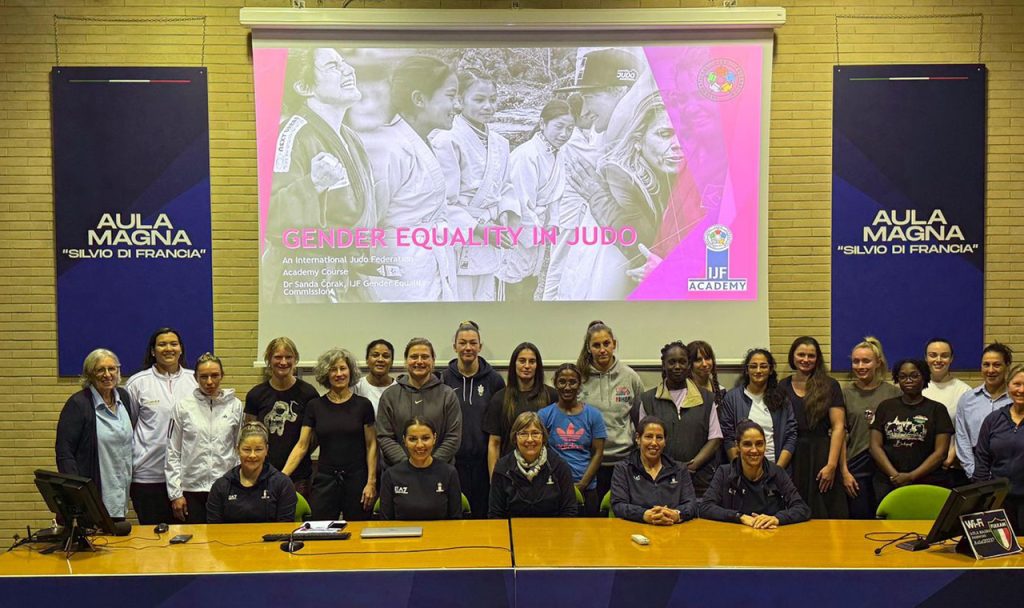
Some leaders shape judo through results – others shape it through people. Ms. Maria Loredana Lascău belongs to the rare group who manage both; yet her heart always leads long before her titles do. At Judo Club Liberty Oradea, a club proudly led by women, she has built a space where women take charge with confidence, grow with support, and lift one another across generations.
We spoke with her during European gender equality week, at a moment when conversations about visibility, opportunity, and women’s leadership in judo feel more important than ever. Through her new role within the WISH Programme, her influence stretches far beyond the tatami, opening pathways for women who are ready to step forward, learn, and lead.
WISH: A PATHWAY BUILT FOR WOMEN
The WISH programme is a key initiative for women in sport. Can you tell us what it is, who’s involved, and how it helps women discover their talent and grow as leaders in judo?
WISH – Women in Sport High-Performance Pathway is an international leadership and coaching programme designed to support elite female coaches who aspire to reach the highest levels in performance sport. It brings together leading universities, sports institutions, and gender-equality experts, and in judo, it is delivered in partnership with the IJF through the IJF Gender Equality Commission and the IJF Academy.
For women in judo, the programme offers something we rarely had before:
- a structured pathway,
- high-level training in coaching, communication, leadership, and decision-making,
- a community of women who share similar challenges and ambitions.
Through WISH, women discover their own voice, learn to trust their expertise, and acquire the tools to step confidently into leadership roles, whether as coaches, technical directors, or programme managers.
FINDING STRENGTH IN TRANSFORMATION
What inspires you most about leading this programme and supporting talented women on their path to becoming coaches and leaders?
What inspires me most is witnessing transformation. When women arrive, they often carry doubts, about their knowledge, their place, or their potential. Through the programme, these same women begin to stand differently, speak differently, and trust their judgement. Watching talent unfold and confidence rise is incredibly powerful. It reminds me that leadership is not about hierarchy – it is about lifting others, opening doors, and leaving the path easier for those who follow.
BUILDING SAFE AND SUPPORTIVE SPACES
How does WISH create a space where girls and women feel safe, accepted, and encouraged to grow – and how does that connect to the environment you’ve fostered at your women-led club, Liberty Oradea?
WISH creates safety through knowledge, representation, and community. When women see female instructors, facilitators, and experts leading the sessions, they realise that leadership is accessible to them too. The programme also encourages open dialogue, reflection, and shared problem-solving, which builds trust and psychological safety.
At Judo Club Liberty Oradea, we follow the same principles. We promote a culture where:
- girls feel seen and valued,
- their emotions and needs are understood,
- they can try, fail, try again, and grow,
- they see women in leadership every day.
Having a women-led club sends a strong signal: “Power and gentleness can coexist, and women belong at every level of judo.”
WHERE GENERATIONS MEET
Intergenerational exchange is at the heart of the JOY project. How important is knowledge transfer in developing young women’s talent and leadership? Could you share an example of how these exchanges inspire and empower young judoka?
Intergenerational exchange is one of the most powerful tools we have. Young girls need role models. Older women need to pass on their wisdom, experience, and mistakes. Together, they create continuity and identity. One of the most inspiring experiences comes from a session where several senior participants became emotional, some even cried. As they said: “For the first time in many years, we felt young again. We felt playful, curious, and alive!” Their joy was contagious. The children also felt empowered and proud. They were teaching adults basic judo skills: ukemi, balance, movement coordination, and for them, it was a profound moment of responsibility and leadership. They realised that judo is not only about strength; it is about connection, empathy, and lifting each other across generations.
If we can replicate this spirit at every level of judo, then the talent of women and girls will not only flourish, it will transform our entire community.
BEYOND THE TATAMI: LEADERSHIP FOR LIFE
How do you see WISH connecting to wider efforts to promote gender equality and nurture talent beyond the judo mat — in sport, education, or community life?
WISH goes far beyond sport. By equipping women with leadership skills, including communication, emotional intelligence, planning, negotiation, and conflict resolution, we are preparing them not only for the tatami, but also for education, business, community leadership, and social impact work. Gender equality in sport becomes a catalyst for gender equality in society. When young girls see confident, knowledgeable women leading on the mat, they understand that they can lead in any field. WISH becomes a bridge between sport and society, linking athletic talent with lifelong leadership.
WHAT JUDO CAN DO NEXT
From your perspective, what more could the wider judo community do to support women and girls at every level and help their talent truly flourish?
There are several practical and meaningful steps the judo world can take to ensure that women and girls feel supported, valued, and able to grow to their full potential:
- Increase female visibility: More women in front-facing roles as coaches, referees, mentors, technical officials, and speakers at events. When girls see women leading, they understand that leadership is possible for them too.
- Create safe, supportive learning environments: Girls stay in judo when they feel respected, listened to, and encouraged. Psychological safety is essential, not just physical safety, so they can take risks, make mistakes, and grow.
- Provide equal access to education and coaching pathways: Women must have the same opportunities to attend courses, apply for scholarships, join leadership programmes, and develop professionally.
- Support mothers and women with family responsibilities: Flexible training schedules, family-friendly environments, and understanding around different life phases can make the difference between continuing or quitting the sport.
- Encourage mixed-gender leadership teams: Diverse teams bring better decisions, healthier cultures, and a wider range of perspectives that benefit every judoka.
- Celebrate the achievements of women – not quietly, but publicly. Recognition builds confidence and shows the next generation that their dreams are valid.
Ultimately, if we want more girls in judo, we must show them a future they can imagine themselves in.
EQUALITY IS NOT A SEPARATE PATH
“For me, gender equality in judo is not about creating a separate path for women, it is about opening the same path for everyone. Women don’t need special treatment, they need fair access, equal support, and the belief of the community behind them. When we give women the space to grow, judo becomes richer, stronger, and more human.”
From Spain, 7th DAN Enrique Eraña on How Welcoming Older Generations to the Tatami Transforms Lives – Including His Mother
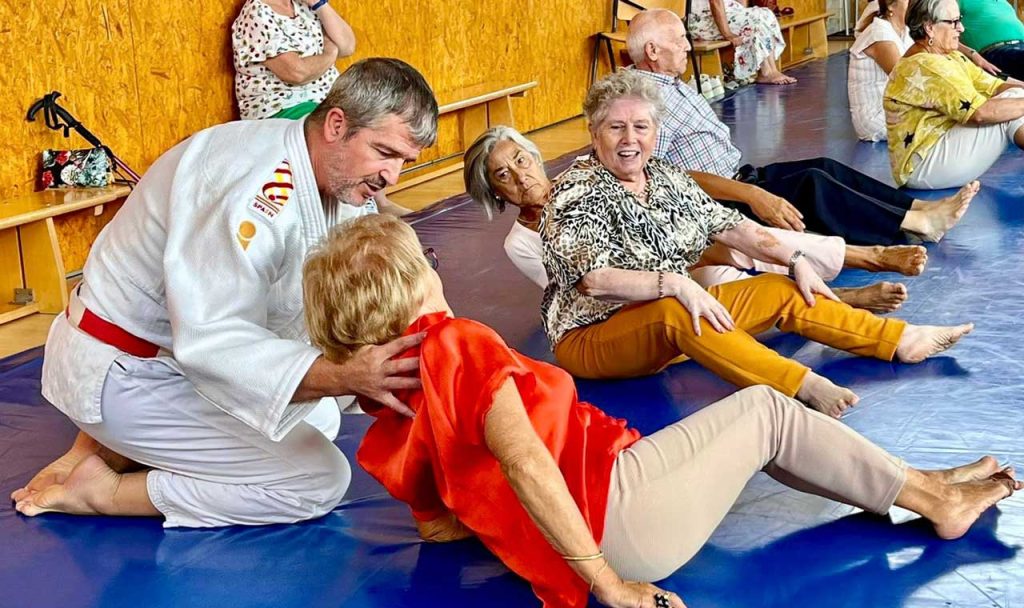
In this JOY Talks interview, we explore the journey of Mr. Enrique Eraña and his work on the implementation of the EDJCO project in Spain, which first introduced judo to older practitioners. From this pioneering initiative to engaging younger generations, Eraña has consistently demonstrated how judo can foster physical activity, social connection, and intergenerational learning.
He reflects on the transformative power of judo, both on and off the mat. Based at Gimnasio Wellness 2000 in Alcalá de Henares, Madrid, Eraña is a highly respected figure in Spanish judo and an experienced IJF referee with extensive international expertise.
Building on your incredible work with older practitioners, we have to start with congratulations! Last December, you received the Madridoca Award for introducing judo to older generations. How did it feel to be recognised in this way?
Honestly, I did not expect it, which made the award even more special. Since it recognises innovative projects with a strong social and cultural impact, I see it not just as a personal honour but as a collective one.
It is a way to thank everyone who supported the project from the beginning, the participants, IJF, EJU, the Madrid Judo Federation, and above all, my family. Most importantly, this recognition belongs to the seniors themselves, who inspire the project every day.
Have online tools like EDJCO supported your coaching of older practitioners?
The EDJCO online course has been an invaluable tool. It’s a living initiative that highlights judo’s enormous social contribution. For coaches, it provides essential guidance and is becoming increasingly important for the future of inclusive judo training.
How many participants have joined your programme so far, and what progress do they make?
We began with pilot groups in Los Negrales, Villanueva del Pardillo, Alcalá de Henares, and Villaviciosa, later consolidating in Torrejón de Ardoz and Alcalá. Today, our groups include 20-30 participants, which helps maintain motivation and continuity.
The first and most visible outcome is socialisation. Participants feel part of a group, which helps reduce isolation. Physically and mentally, they gain strength, balance, and flexibility, which gives them greater confidence and security in daily life. Judo also teaches them how to fall and get up safely, a crucial skill for preventing injuries. Beyond the physical benefits, judo has provided significant emotional advantages: it reduces stress, boosts self-esteem, and fosters a strong sense of achievement.
Many worry that judo is too rough for seniors. How do you help participants feel safe and confident?
Many participants arrive with concerns, often associating judo with fighting or hard falls. But they soon discover it’s far from aggressive. Instead, they realise it’s an activity that improves both physical and emotional well-being – and it’s fun too!
Their main fears usually involve balance and contact with the ground. We focus on teaching safe movement, how to fall and get up without risk, and gradually building self-confidence. We also introduce self-defence techniques, carefully adapted to their age and abilities, so participants feel empowered rather than intimidated.
Can you share a story that has deeply moved you?
Every participant has their own story, and each one moves me in different ways. After many years teaching judo, working with seniors affects me emotionally even more than other stages of my career. On the tatami, people with very different realities come together: some have never practiced sports, others live with illness or struggle with low confidence. What’s truly wonderful is seeing them support one another.
For example, María, a woman over ninety, was overjoyed to practice judo because it allowed her to share the experience with her grandchildren, who were also training. That intergenerational connection was incredibly special.
If I had to pick one story that moves me the most, it would be that of my mother. After a lifetime in which my siblings, children, and nephews have practiced judo, she herself began at 84 years old. Watching her gain strength, confidence, and a renewed quality of life—overcoming her fear of falling and inactivity—is profoundly motivating. It’s a beautiful example of how the project transforms lives, even within my own family.
How have seniors reacted to training alongside younger generations in JOY?
We’ve already seen very natural intergenerational moments, bringing grandparents, parents, and grandchildren together on the tatami. In the last two seasons, we organised special end-of-year celebrations where older practitioners trained alongside their family members. After practice, there’s a belt and diploma ceremony, a beautiful moment where grandchildren participate enthusiastically and share in their grandparents’ recognition.
We’ve also developed other experiences under the concept of “Family Judo,” where parents and children practise together. All of this highlights the enormous intergenerational value of judo: it’s not just a sport, but a tool to unite generations, share values, and create special bonds.
With your long experience, including as an IJF referee, how has working with older practitioners changed your understanding of judo as a sport and as a tool for personal growth?
This is a very special question for me. Over the years, I have taught judo, competed in both kata and shiai, and refereed internationally. These experiences have given me a broad perspective on the sport.
Working with older practitioners has surprised and moved me profoundly. It has helped me appreciate how great judo truly is, not only as an Olympic sport or martial art, but as a tool with far-reaching possibilities. It has shown me that judo can provide knowledge, culture, and a sense of belonging.
In my classes with seniors, I include simple refereeing concepts: learning what a waza-ari is, what an ippon means, or why the referee calls mate. This allows them not only to train but also to enjoy watching competitions, even following the Olympics while understanding what happens on the tatami. I have even developed a refereeing kata at different levels. The basic version serves as a warm-up and coordination exercise while teaching gestures, scoring, and rules.
Senior practitioners not only practise judo but also contribute greatly to the sport. They help in competitions, with timekeeping, scoreboards, or refereeing support, and feel like active members of the judo community. This project has been truly enriching in combining all of these aspects.
What are the most common misconceptions about older people in judo, and how can projects like JOY help clubs and coaches worldwide rethink age, ability, and inclusion while strengthening intergenerational solidarity?
A common misconception is that older people do not belong on the tatami or that judo is too demanding for them. In reality, seniors gain physical, social, and emotional benefits, while also contributing their experience, consistency, and wisdom to the community.
Both the EDJCO and JOY projects represent an important shift in judo education, proving that judo has no age limits and can be practised, enjoyed, and shared at any stage of life. JOY adds an intergenerational dimension that enriches teaching and practice. I hope coaches worldwide will be inspired to welcome older practitioners, recognising that judo is not only a sport, but a lifelong tool that unites and empowers everyone. Many will also benefit from the online course JOY will offer, helping bring this vision to life in their own dojos.
Your final message for judo coaches?
My message is simple: open your tatami. Invite older generations in. You will not only transform their lives, they will transform yours, and the future of judo.
Together on the tatami, together in life: How Judo became a path of healing, bonding, and empowerment for Ms. Ana Sajko and her daughter
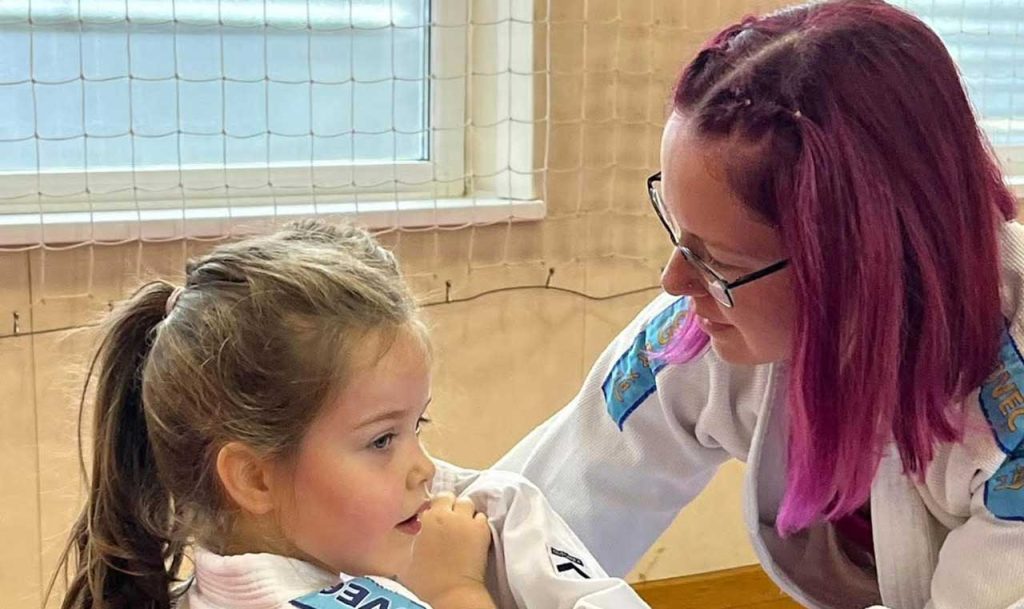
In JOY Talks Interview #4, we step into a deeply personal story from Slovenia, the story of Ms. Ana Sajko and her six-year-old daughter Neja, who shares her mother’s love for judo, from Judo Club Golovec. Ana first walked into the dojo during one of the most difficult chapters of her life. As a survivor of domestic violence, she was searching not only for strength, but for a way to feel safe again – in her body, in her mind, and in the world around her. Through the club’s “Judo for Women” programme, Ana slowly began to rebuild her confidence and reclaim her sense of self.
But the real transformation began when she invited her daughter Neja to join her.
What began as a solitary journey of healing grew into something much greater – a shared experience of trust, joy, and quiet strength. Their story is more than just a tale about sport. It’s a reminder that judo is not only about throws and discipline – it can be a space of belonging, recovery, and the kind of bond that words alone cannot create.
How did your judo journey begin, and how did you experience it together as mother and daughter?
Ana:
I started judo through the Judo for Women programme at our club, created for women like me who had experienced domestic violence or had fewer opportunities. I came with fear and uncertainty, unsure if I even belonged. But already in the first session, I felt something shift. My body moved with strength again, not tension. When I later brought Neja to practice, something truly magical happened. It was as if we found a common language we hadn’t spoken before. Judo became our safe space.
What does it mean for you to train together as a family?
Ana:
It’s our special time. A piece of the week that no one can take away from us.
Sometimes, across the tatami, we just look at each other, and we know. No words needed. In those moments, I’m not just someone healing from trauma. I’m a mother, building a future.
Neja:
I like training with my mom. She shows me some techniques, and sometimes I teach her something too! (laughs) The best part is when we hug after practice. I love that we both enjoy judo, and that my mom helps me and corrects me, and we do it together.
Your story is also one of transformation. How has judo helped you face past trauma or feelings of powerlessness?
Ana:
It’s hard to put into words what it feels like to trust again. First your own body, and then other people. Judo gave me a sense of control over myself, not through force, but through respect, discipline, and softness. Neja felt everything, even when I didn’t say a word. With judo, we both began to release tension. I feel like we’re slowly healing – together.
What message would you like to share with other families or individuals who might be going through difficult times?
Ana:
Even when it feels like there’s no way out, there are places, like this judo club, where you can finally breathe again. Judo isn’t just a sport. It’s a way back to yourself. And when you bring your child with you, it becomes even more. It becomes a healing path for the whole family. To anyone out there who is struggling: Don’t worry about getting it perfect. Just take the first step and keep moving forward.
Neja, why do you love judo? What’s your favorite part of training?
Neja:
Because we jump and roll around! And because my mom trains with me. I even did a real throw once, and everyone clapped! I like our judo coach the most. He’s the best! We play a lot of games and do gymnastics too. It’s really fun.
How do you feel when you’re with your mom at the club? Is there something special you like doing together?
Neja:
I feel good. Actually, I feel rainbow-good! (laughs) Sometimes we’re on the tatami together, and sometimes I train with the other kids. I like it when we train in pair, and at the end of training, my mom always spins me around. After judo class, we go for tea or ice cream. It’s our little tradition.
If you had to explain judo to a friend who’s never tried it, what would you say?
Neja:
It’s fun, and it teaches you how to fall without getting hurt. I have a friend, Alexis, who’s blind, and he trains with me. He’s not special, just different, and he trains a bit differently too. Judo is a martial art, but we also play and do gymnastics. And yes, we fight a little bit too!
Judo Beyond the Tatami – Leadership, Gender Equality, and Lifelong Values with Ms. Kristiina Pekkola
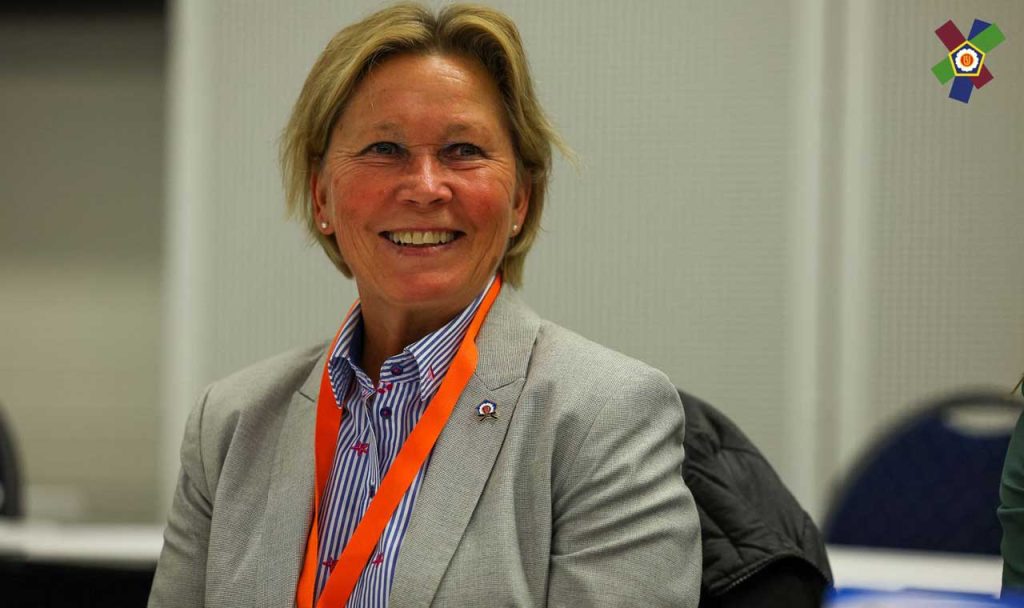
In every judo club, beyond medals and rankings, there are people, young and old, who return to the tatami week after week, driven by something deeper. It’s in these shared moments, between generations and across experiences, that the true power of judo is revealed.
In the third edition of JOY Talks, we speak with Ms. Kristiina Pekkola, Vice President of the European Judo Union (EJU), whose leadership and vision reflect this deeper meaning. She shares insight into intergenerational learning, gender equality in leadership, and the EJU’s strategic direction, while highlighting how the JOY project supports long-term goals for inclusive judo development across Europe. From coaching education to community building, this conversation offers valuable guidance for anyone committed to building a more inclusive and sustainable future for our sport.
How have you experienced intergenerational learning during your judo journey? Could you share a memory that highlights judo’s core values of respect and harmony?
Judo naturally fosters intergenerational learning. Whether it’s a grandparent practicing ukemi (falling techniques) alongside a grandchild, or a seasoned judoka mentoring a young beginner, the dojo becomes a space where age dissolves in mutual respect.
One memory that captures this spirit is a shared kata demonstration, where a young judoka and an older practitioner move together in harmony. In these moments, judo’s core values truly come alive: respect, mutual benefit, and harmony. Judo builds bridges between generations, showing us that learning is lifelong and that everyone, regardless of age, has something meaningful to offer.
In what ways can intergenerational initiatives support the European Judo Union’s vision of judo as a lifelong sport and foster stronger, more connected communities across Europe?
JOY beautifully embodies the EJU’s vision of judo as a lifelong practice. By creating inclusive training environments, it encourages lifelong physical activity and builds social bridges between generations. It also promotes mental well-being through a shared sense of purpose and community. In doing so, JOY strengthens not only judo clubs but also the social fabric of communities across Europe.
As a strong advocate for women’s visibility and leadership in judo, how do you see projects like JOY advancing the EJU’s gender equality goals and encouraging women of all ages to take leadership roles on and off the tatami?
I have long been passionate about promoting women’s visibility and leadership in judo. JOY is all about creating safe and inclusive spaces where women of all ages feel welcome to train and develop. The project highlights female role models, from young girls to older women, who embody courage and leadership. We also encourage female coaches and leaders to take active roles in intergenerational programmes. In doing so, JOY closely aligns with the EJU’s gender equality goals and inspires women to step confidently onto the tatami and into leadership roles.
Why is it important to recognize the everyday heroes of judo – people of all ages training with courage and dedication? How can sharing their stories reshape public perception and attract new generations to the sport?
JOY gently shifts the spotlight away from elite athletes to everyday judoka: children, parents, grandparents, who show up with courage and commitment. These stories humanise the sport, making it more relatable and accessible. They inspire newcomers who might otherwise feel intimidated by competitive judo and reinforce the core values of perseverance, humility, and mutual respect that judo teaches. By celebrating these quiet heroes, JOY helps reshape public perception and attract new generations to our sport.
The project consortium is developing an online educational tool for coaches to enhance training quality and promote inclusive, intergenerational practice. How do you envision this innovation influencing coaching standards and contributing to judo’s growth?
The JOY project is creating an evidence-based online educational tool for coaches that will be hosted on the IJF Academy platform. I see this innovation as a key step in standardizing coaching practices, especially for intergenerational groups. It will improve the quality and safety of training while equipping coaches with the knowledge and skills to foster inclusive, age-diverse dojos. Ultimately, this tool will help make judo more accessible and sustainable across Europe.
With your extensive experience in sport development, what advice would you give to national federations and local clubs aiming to promote inclusive, intergenerational judo? What practical first steps can help overcome challenges such as engaging older practitioners or encouraging more women to participate?
From my experience in sport development, I believe the key is to start small and build gradually. Introducing a weekly intergenerational class or open mat session can be a great first step. It’s also crucial to train coaches properly, and tools like JOY’s educational resources can really help prepare them to work with diverse age groups.
Sharing local success stories is another powerful way to inspire participation and show what’s possible. Partnering with community centres can help reach older adults and families who might not yet be involved in judo. Ultimately, the goal is to create welcoming, flexible environments where everyone feels they belong.
Could you share a personal story from your time with the EJU where judo’s ability to connect generations or empower women deeply inspired you? How has this experience shaped your ongoing work and vision?
Every year at the European Championships, the EJU hosts a “kids camp” that brings together children from all across Europe. It’s truly inspiring to see moments where a grandmother and granddaughter practice side by side, laughing, learning, and growing together. These moments really fuel my passion for inclusive judo and help shape the vision we have at the EJU for a sport that welcomes everyone, regardless of age or background.
Finally, if you could speak directly to women, older adults, and young people across Europe asking themselves, “Is judo really for me?” what heartfelt message would you share?
Judo is not just a sport, it’s a way of life. It welcomes you exactly as you are, at any age and from any background. Whether you’re 7 or 70, judo offers you strength, confidence, and a true sense of community. So step onto the tatami, you belong here!
Shunsuke Mukai: From Tokyo to Rijeka: Teaching the Spirit of Kodokan Judo in Europe
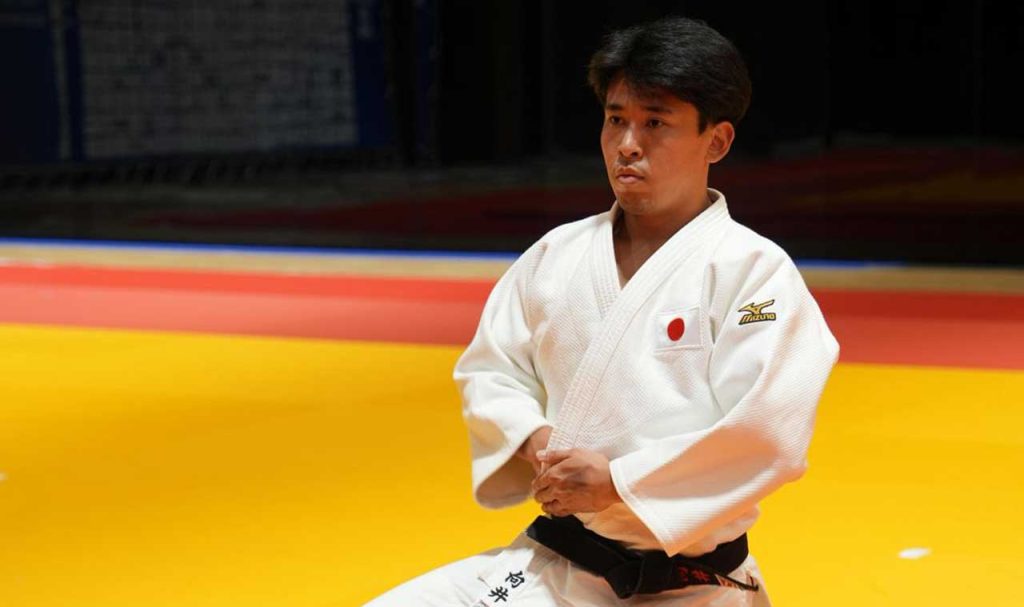
In this second edition of JOY Talks, we explore a unique perspective on intercultural exchange through the lens of judo. Meet Mr Shunsuke Mukai, a 4th DAN judo coach from Tokyo, Japan. At just 29 years old, Mukai has spent the past two years living and working in Croatia with Judo Club Rijeka.
Bringing with him the depth and tradition of Kodokan judo, Mukai has fully immersed himself in the diversity and spirit of European judo culture. This conversation looks at how one coach is building a meaningful bridge between East and West—and how intercultural experiences can profoundly enrich not only coaching methods but also community life.
You grew up with judo in Japan and now coach it in Europe, in Rijeka, Croatia. How does that experience compare?
To begin, I’d like to compare the training environments of judo in Japan and Europe. I’ve been living in Croatia for over two years now, and I’ve noticed that in most European countries, not just here, people typically belong to a single judo club, where they train continuously from childhood through to adulthood.
In contrast, the training system in Japan is quite different. Children up to the age of 12 typically belong to local judo clubs in their town. When they enter junior high school (ages 13–15), they join school-based judo clubs as part of extracurricular activities. These clubs are usually run by schoolteachers. This structure is common across various sports in Japan. High school students (ages 16–18) and university students (ages 19–22) also practice judo as a school activity. Children who want to become stronger often choose to attend schools with strong judo programmes at each of these stages.
After becoming adults, competitive athletes often continue judo while working for companies that support the sport. Some of these companies even have their own dojos. Others keep training at their former schools while working. It’s also common for people to become public servants, like police officers or members of the Self-Defence Forces, and continue practising judo. As you can see, the judo environments in Japan and Europe are very different. However, judo practice in clubs for primary school-aged children is quite similar in both regions.
What do you think about judo as a sport for all ages?
Judo training consists of four core elements: kata (forms), randori (free practice), lectures, and Q&A-style discussions. Ideally, a well-balanced judo programme should incorporate all four. But today, most sessions focus heavily on randori, especially due to the competitive nature of modern judo.
As we grow older, intense randori becomes more difficult, which is why it’s essential to place more emphasis on kata, theory, and discussions. These elements help deepen our understanding of judo. For this reason, I truly believe judo is a lifelong discipline, something you can practise and learn at any age.
In Japan, do children and older people sometimes train together? Is that common?
Not really. In Japan, children and adults usually don’t train together. Their physical ability and comprehension levels are quite different, so the training is adapted accordingly.
That said, there are occasional joint classes, like parent-child judo sessions, which are more relaxed and focus on having fun together. Also, sometimes children and adults will do randori together, but it’s not a regular part of training.
What have you learned here in Europe, as a coach and as a person?
To understand European life and culture more deeply, I’ve explored many things outside of judo. One thing that really stood out is how present religion is in people’s daily lives. In Japan, although we have Shintoism, Buddhism, Confucianism, and Taoism, most people don’t strongly identify with a specific faith or express it openly. In contrast, many Europeans actively practise a religion, which has helped me understand different value systems more clearly.
Judo itself also varies from country to country, each has its own system, style, and challenges. These differences have taught me a lot, both as a coach and as a person.
What have you brought from Japan to your judo club in Rijeka, Croatia?
Without a doubt, the biggest influence I’ve brought is the authentic Japanese style of judo. I’ve been practising at the Kodokan since I was a child. I still remember the words of Mr. Haruki Uemura, the president of the Kodokan, who often told us: “Follow proper etiquette, grip correctly, and aim for an ippon with techniques that are logical and make sense.”
That, to me, is the true spirit of Kodokan Judo. When I started teaching in Croatia, I was honestly surprised by how different the style was. Many techniques, like ippon-seoi-nage or harai-makikomi, were applied immediately upon contact, often with just one grip. At first, I wasn’t sure how to communicate the Kodokan method, especially with the language barrier. But I trusted in my experience and used gestures, body language, and whatever tools I had to convey it. Even if results don’t show immediately, I believe that learning authentic judo from a Japanese teacher is something that stays with students forever.
Outside of judo, I also try to share Japanese culture, like origami, traditional games, or cooking. These are experiences not easily found in Europe, and I hope they offer something special.
What surprised you the most about the children you teach here?
One surprising thing is how many children don’t clearly distinguish between left- and right-handed grips. Some train with one grip but switch during randori or competition. In Japan, from the start, beginners are taught to choose their dominant grip and stick to it. They may execute techniques to either side, but the grip side stays consistent.
Another thing is that children here often wait for instructions rather than thinking independently. Because they stay in the same club with the same coach for years, they sometimes lack initiative. Listening is important, of course, but I also think it’s essential to encourage creativity, self-reflection, and learning through trial and error.
What surprised you about older judo practitioners or older coaches?
Although I haven’t had many chances to work closely with older coaches, I’ve been deeply inspired by their passion and commitment. Their dedication to judo is impressive.
How do you feel when you see a child training with a parent or grandparent?
It’s truly beautiful. Children bring so much energy and joy, and when they train alongside family members, it becomes a meaningful form of communication. It builds strong relationships across generations. I think judo is an amazing way to connect people, physically and emotionally.
If you could answer in one sentence – why is judo good for all generations?
Because through the principle of “Mutual Welfare and Benefit” (Jita-Kyoei), judo helps people of all ages grow, connect, and contribute to society, together.
Finding JOY on the Tatami with Ms. Licia Maristella, 85
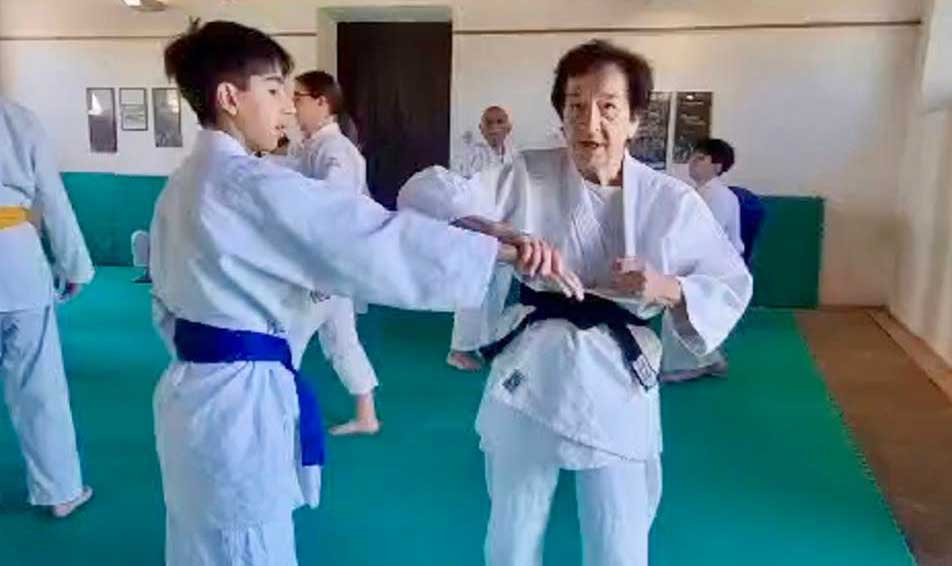
From Rome, Italy, Ms Licia Maristella began her judo journey at Scuola Judo Tomita at the remarkable age of 76. Her inspiring story shows how judo can open new doors at any stage of life, bringing JOY strength, and a deep sense of connection. Discover her experience, the challenges she faced, and the wisdom she has gained both on and off the tatami.
Licia, looking back, how would you describe your life before judo? What characterised the years before you started practising sport?
I’ve always done sport, but I would never have imagined doing judo.
At 76, you did something many people would never dare, you started practising judo. What led you to this decision?
It was a fortunate coincidence. My son called me and invited me to watch my six-year-old grandson’s judo demonstration. I agreed, and that was where it all began. At the end of the demonstration, there was an announcement, they were looking for people aged between 60 and 75 to join a judo course, led by judo instructor Simone Ciaccioni, as part of his PhD research project at the University of Rome “Foro Italico”. My son encouraged me to sign up, but I told him I was already past the age limit. As we were leaving, he spoke directly to the instructor, who kindly agreed to accept me despite my age. And that’s how my completely unexpected judo journey began.
Do you remember your first training session? How did you feel, physically, emotionally, and in relation to others?
I remember feeling uncomfortable during my first training session. We had to practise gripping the judogi in pairs, hugging perfect strangers. But that discomfort quickly disappeared. Everyone was extremely kind and respectful.
What does judo represent for you today? Is it just physical movement, or something deeper?
Practising judo has given me a greater sense of security and self-esteem. Hearing my grandson proudly say, “I’m the only one who has a grandmother who does judo,” and training with young people who say, “I wish my grandparents practised judo too,” is truly motivating. I really enjoy this sport because it’s based on precise and educational behavioural rules.
Many people think it’s too late to start exercising at an advanced age. What would you say to them?
I would say that it’s never too late! There are many levels of judo, and everyone can adapt to their own abilities. As for breakfall techniques, they’re an excellent way to learn how to fall without getting fractures, which is especially important as we age. I’ve actually fallen several times, but my body remembered how to do it safely. Even the brain stays active because you have to memorise all the kata movements and judo techniques perfectly.
In the EDJCO project, a predecessor of the JOY project, you were part of a group that changed how people see ageing through sport. How did you experience it? What did it leave you with?
I’m living proof that practising judo, even at 85, brings both satisfaction and a stronger sense of personal safety, including in terms of self-defence. The judo coaches often say, “If there’s danger, don’t hesitate, run away.” I always reply, “If I can’t run, maybe something I’ve practised in judo will help me.”
You now participate in the new JOY project, where you train alongside younger people. How do you experience this meeting of generations? What do young people mean to you? Do you sometimes feel like a grandmother, a guide, or a friend?
I get a great deal of satisfaction from training with children, and even more so with teenagers. On many occasions, they’ve pointed out small details in my movements, which has helped me refine my techniques and improve their effectiveness.
What do you think you learn from them, and what do you believe you pass on to them? Can you share a moment that surprised or moved you?
As I mentioned earlier, there’s so much to learn from them. What I hope to pass on is the idea that, no matter how many years go by, you can remain active and keep a positive outlook on life.
What do you find most difficult, and most beautiful about judo? Are there moments when you feel tired? What keeps you going?
The most difficult part is remembering all the terms and the movements of the techniques.
Judo kata, on the other hand, are very relaxing for me. I don’t feel tired when I practise judo. What keeps me going is the atmosphere, my training partners are kind, always smiling, and ready to help when needed. And of course, we have excellent judo coaches at Scuola Judo Tomita.
If you could speak to all the elderly people across Europe, what would you say to them?
I would encourage them, “Go and try judo!” It will bring you great satisfaction and can help prevent future fractures, of the neck, limbs, and more. And your grandchildren will have something to proudly tell their friends, “My grandparents do judo.”