
SCIENTIFIC REPORTS
Nana Korobi, Ya Oki (fall 7 times, get up 8 times) - How the Ancient Wisdom of Judo Opens New Horizons in Neurological Rehabilitation
“To learn to fall is not to accept defeat, but to master the art of standing up once more.” — Kano Jigoro Sensei
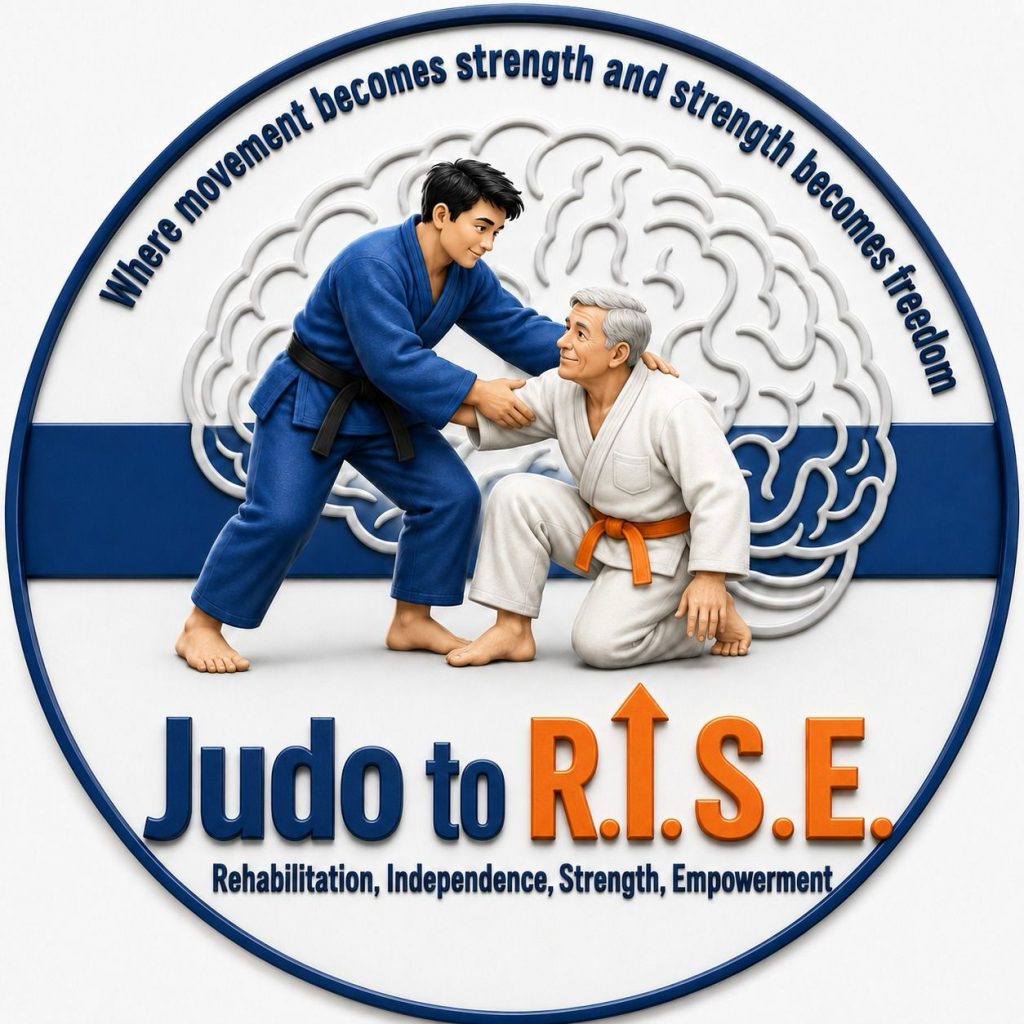
In judo, learning to fall is an integral part of learning to get back up. Thanks to two Erasmus+ projects, this familiar lesson raised an unexpected question: could judo help people with Parkinson’s disease get back up, enabling them to move with greater autonomy?
The “Gensoku no Genkei”—developed within the EdJCO project and refined through JOY— introduced the practice of safe falling and adapted judo for older adults. Today, it forms the foundation of “Judo to R.I.S.E.,” a structured program devised by Prof. Attilio Sacripanti and his colleagues to explore its potential in rehabilitation based on neuroplasticity.
A single-case study published in 2025 highlighted improvements in the ability to rise from the floor, postural alignment, and quality of life after nine weeks of practice. While encouraging, these observations involve only one individual and do not yet establish the program’s overall efficacy. A pilot study involving approximately twenty volunteers is currently being prepared in the Republic of San Marino, in collaboration with the San Marino Judo Federation (FJLAS) and the State Hospital’s Neurology Unit. The initiative is planned to take place under medical supervision and is subject to ethics committee approval.
At the heart of this journey—spanning from practice for the elderly to rehabilitation for Parkinson’s—lies judo itself: its capacity for adaptation and the open-mindedness of its practitioners.
The EdJCO and JOY projects helped create the conditions for an idea to move from the tatami to a neurology ward. It is the “Do” of “Ju”… through Neuroplasticity
Before we explain the connection among Ju and Do to Neuroplasticity, we must before understand neuroplasticity itself in these terms. Neuroplasticity operates through several basic principles:
- “Use it or lose it”: Neural pathways that are not used weaken; those that are used strengthen.
- “Specificity”: Plasticity is specific to the type of training and the context in which it occurs.
- “Repetition and intensity”: Change requires repeated, focused practice.
- “Significance”: Emotionally meaningful experiences drive plasticity more effectively than neutral ones.
- “Critical periods and lifelong potential”: While plasticity is greatest in early life, it remains possible throughout the lifespan, especially with enriched environments and intentional practice.
Now, look at these principles through the lens of Judo:
- “Use it or lose it” is a form of “Ju” the body yields to the demands placed upon it, adapting to what is practiced and letting go of what is not.
- “Specificity” reflects the “Do” of Judo, the Way is walked step by step, and each step shapes the path.
- “Repetition and intensity” are the rhythm of “Nana Korobi, Ya Oki”: fall seven times, rise eight; practice, repetition, return.
- “Salience” is the emotional and existential weight of ukemi: learning to fall is not trivial; it is a confrontation with fear, gravity, and finitude. This makes it profoundly plastic.
- “Lifelong potential” is the promise of “Do”: the Way is open to all, at any age. The older practitioner is not excluded from transformation.
Thus, neuroplasticity is not a separate scientific domain divorced from philosophy. It is the biological expression of Ju Do. The nervous system is a yielding system; it is also a path-making system. Judo, as a practice, aligns with these deep principles of neural life.
Ju, Do, and neuroplasticity converge in a single insight: “to live is to fall, to learn is to yield, and to progress is to walk the Way.” Judo, as the Way of Yielding, offers a practice that highlights this insight.
It does not promise a life without falls. It promises a path of rising.
For neurological rehabilitation, this is revolutionary. It shifts the focus from fixing deficits to cultivating potential. It replaces force with intelligence, fear with trust, rigidity with pliancy; it invites the older practitioner not as a patient but as a fellow traveller on the Way, moving towards a better world where people help one another, in accordance with Kano Sensei’s vision embodied in the maxim “Jita Kyoei”.
The next challenge will be to discover what useful contributions judo can offer society in everyday life.
Research Perspective by Prof. Attilio Sacripanti, IJF Academy
Judo across ages: coaches’ perspectives on key elements of intergenerational training programmes
Journal: Frontiers
Frontiers in Psychology – Volume 16-2025
November 2025
Judo across ages: Opinions, knowledge, and experiences of Judo coaches regarding the most relevant aspects to be included in an intergenerational training programme
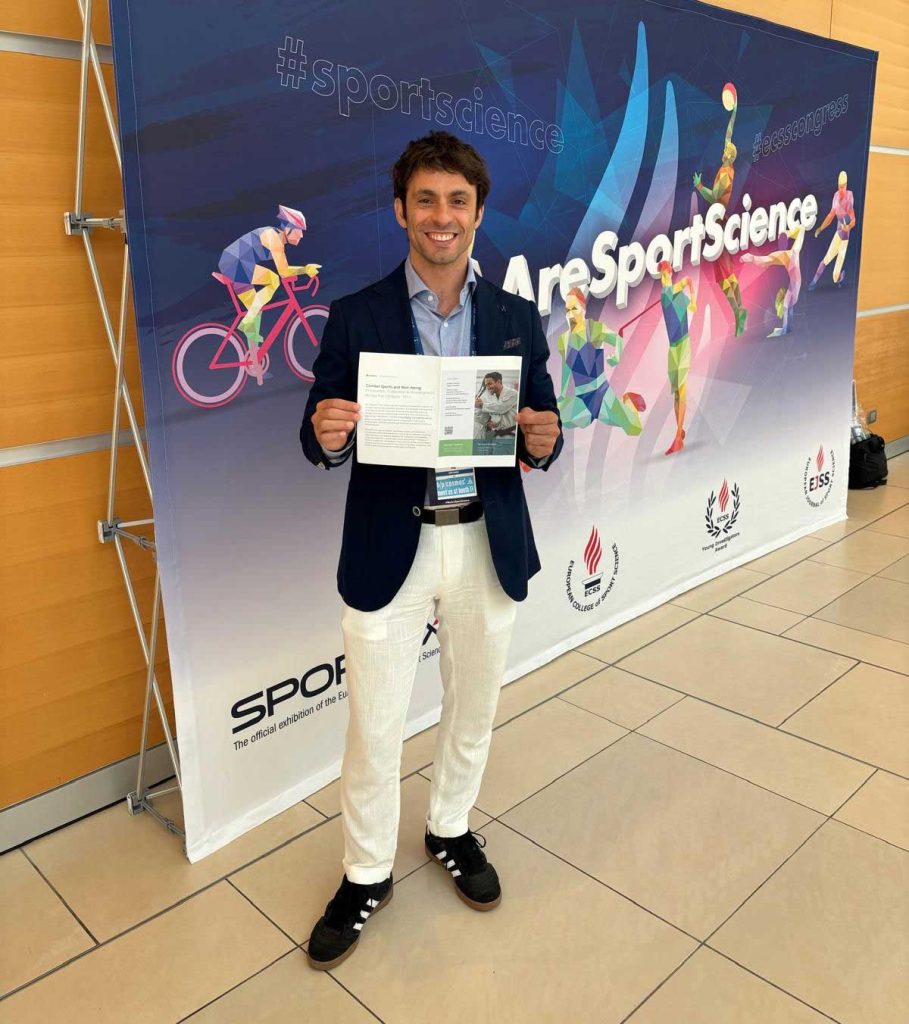
30th Annual ECSS Congress – European College of Sport Science
Rimini, Italy | 1–4 July 2025
Poster Presentation by Dr. Simone Ciaccioni
In recent years, the European Union has highlighted the importance of intergenerational physical activity to promote active ageing, strengthen social cohesion, and support a healthier society.
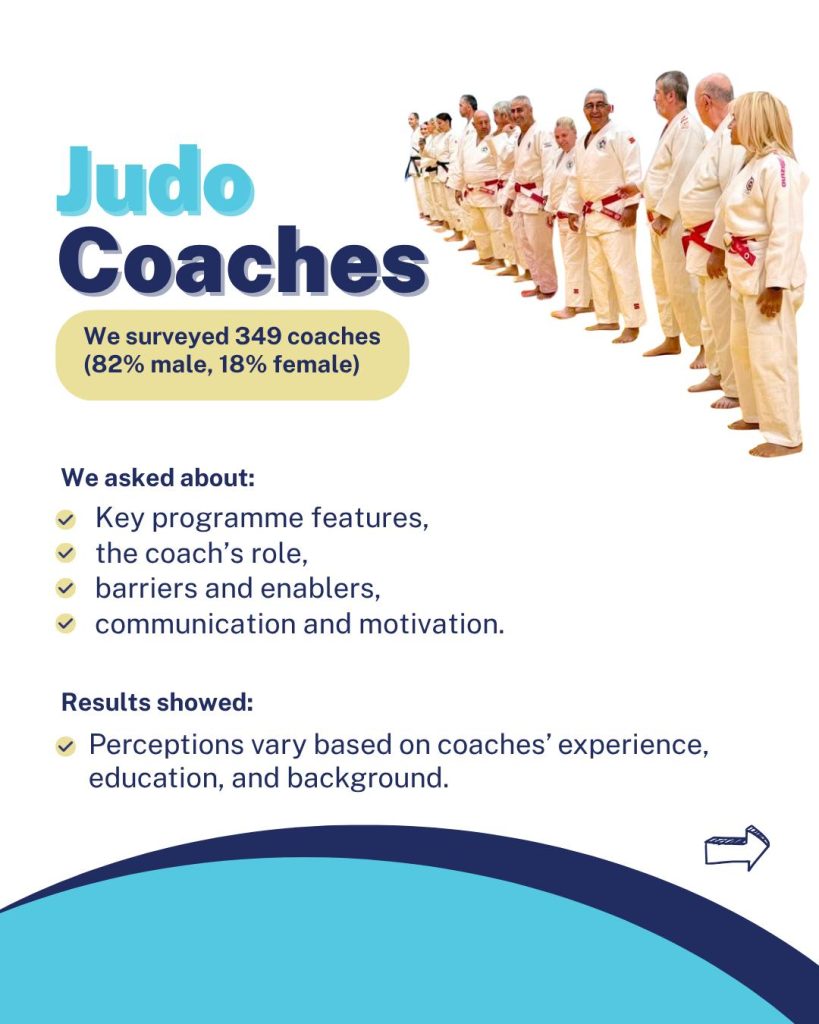
This study explored insights from 349 judo coaches worldwide on what they consider essential for effective intergenerational judo training.
The survey focused on coaches’ perspectives regarding:
* Key elements of training design
* Coaching roles and philosophies
* Barriers and enablers
* The importance of mutual respect, inclusion, and mentorship, among others
Key findings:
* Coaching philosophy is influenced by age, education level, elite athlete background, and years of experience.
* Gender played a role in how coaches valued role modelling and technical skills.
* Coaches with a sports science degree placed more emphasis on passion for sport and mutual respect.
* Former elite athletes had a distinctive approach to communication and mentorship.
* Real-world experience with intergenerational training shaped coaches’ views on adaptability, technical competence, and training environments.
Conclusion:
There is no one-size-fits-all approach. Effective intergenerational coaching in judo requires:
* Tailored professional development
* Cross-disciplinary mentorship
* Sensitivity to the diverse profiles of coaches
Read the abstract on p. 404 in the official Book of Abstracts:
ECSS Congress 2025 – Abstract Book
References:
* European Commission (2020). Mapping Study on the Intergenerational Dimension of Sport – https://data.europa.eu/doi/10.2766/339239
* Ciaccioni et al. (2023). Psychology of Sport and Exercise – https://doi.org/10.1016/j.psychsport.2023.102556
* Ciaccioni et al. (2024). Sports – https://doi.org/10.3390/sports12070177
MDPI Journal
Sports-Volume 12-Issue 7
June 2024
READ THE ARTICLE HERE
